Beschreibung
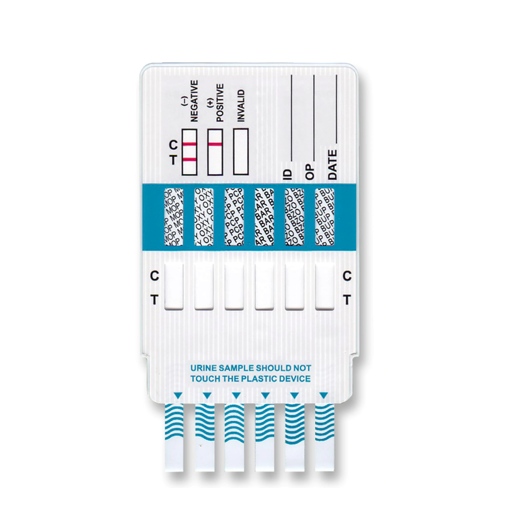
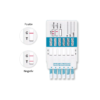
Use the drug multitest to be able to prove the consumption of 12 types of drugs by means of a urine sample. The multi drug test procedure is therefore particularly suitable for obtaining evidence of drug consumption for a large number of drug types in the shortest possible time.
Drug test for 12 substances:
This combined rapid test for use at home determines the following drugs:
- Morphine
- Spice K2 (Crack)
- Cocaine
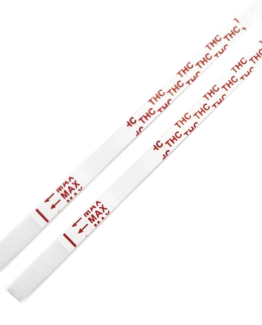
- THC (cannabis / marijuana / hashish / hemp)
- MDMA (Ecstasy)
- Opiates (heroin etc.)
- Methamphetamine (Crystal, Meth)
- Methadone
- Oxy
- Phencyclidine (Angel Dust)
- Amphet. (Speed)
- Benzodiazepin
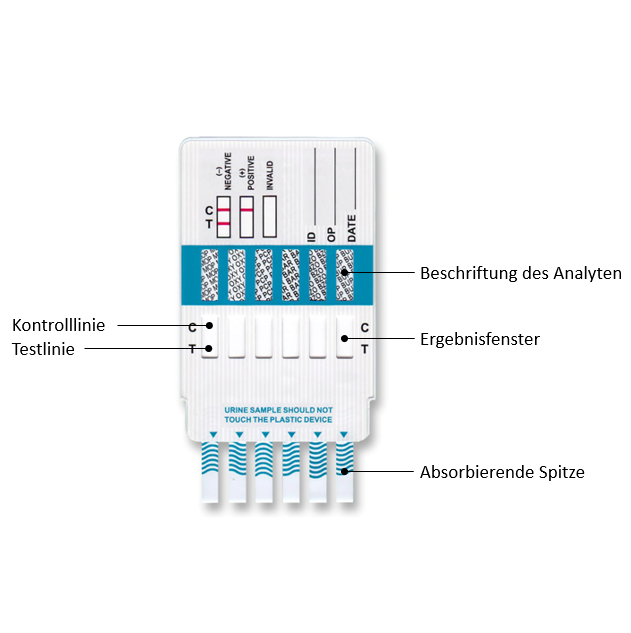
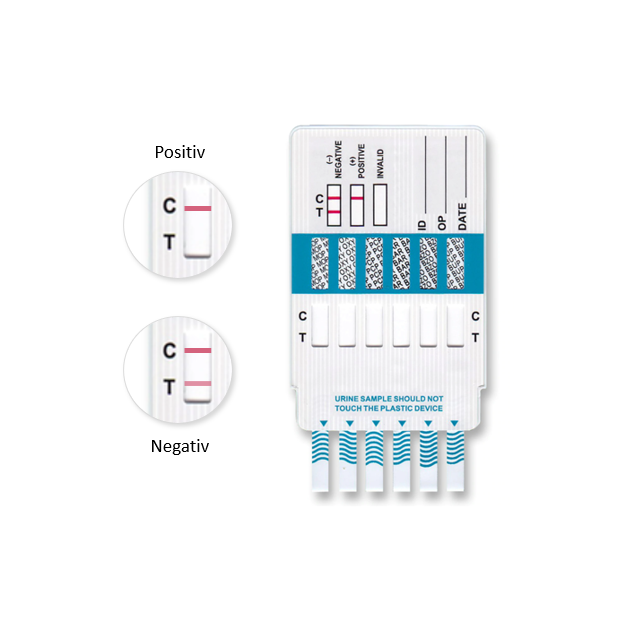
The drug multitest shows for each drug individually whether the test is positive or negative.
Application drug multitest:
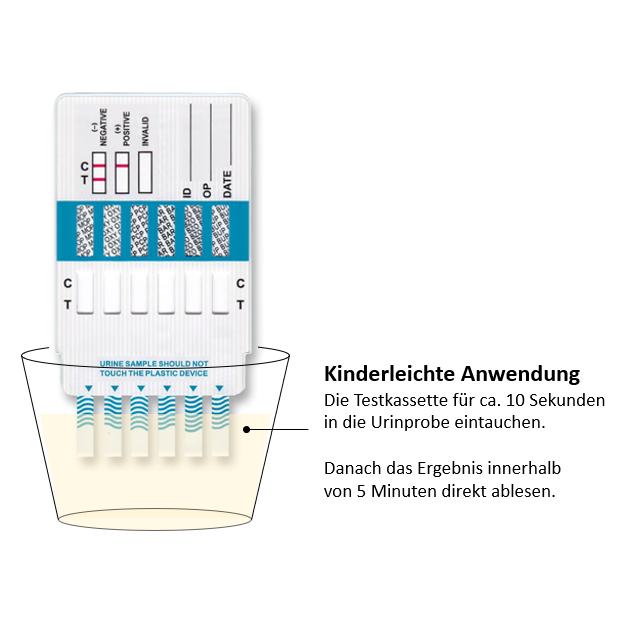
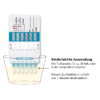
Remove the test cassette for the drug multitest from the packaging and immerse it in the urine for approx. 15 seconds. Then place the drug test cassette in a dry place and wait for the test result, which can be read after approx. 3 minutes.
The exact procedure for the drug multitest can be found in the package insert.
Free and discreet delivery!
Cut Off Information Drug Multitest:
| Description | Cut-Off | Detection duration |
| Cocaine | 300 ng/ml | 1 – 3 Days |
| opiate | 2000 ng / ml | 2 – 4 days |
| THC (cannabis, marijuana, hashish) | 50 ng / ml | 3 – 5 days, several weeks for continuous use |
| Morphine | 300 ng/ml | 4 – 5 days |
| Benzodiazepin | 300 ng/ml | 1 – 3 Days |
| Methadone | 300 ng/ml | 2 – 3 days |
| Amphet. (Speed) | 1000 ng/ml | 1 – 3 Days |
| Methamphetamin | 1000 ng/ml | 1 – 3 Days |
| MDMA (Ecstasy) | 500 ng/ml | 1 – 3 Days |
| Spice / K2 | 200 ng/ml | 3 – 5 days, several weeks for continuous use |
| Oxy | 300 ng/ml | 2 – 4 days |
| Phencyclidin | 25 ng/ml | 1 – 5 days (up to 2 weeks) |
Information on the individual drugs:
Morphine:
Morphine, also called morphine , is one of the opioids. Morphine is a drug that is mainly given to relieve moderate to severe pain. Morphine originally comes from the milky sap of the plant Papaver somniferum (opium poppy). In medicine it is available in the form of tablets, capsules, syrup, suspension, suppositories, drops or as an injection. Morphine is physically and mentally dependent. For this reason, morphine is subject to the Narcotics Act. Morphine has an analgesic, antitussive, sedating, tranquilizing, respiratory depression, miotic, antidiuretic, emetic and antiemetic effect. As with all opioids, their effect is based on binding to opioid receptors, especially the µ-receptor.
Spice K2:
Spice is a drug that consists of synthetic cannabinoids and various dried parts of plants. Spice is especially used as a substitute for cannabis products.
Cocaine:
Cocaine is extracted from the leaves of the coca bush. As a powder (coke), it is sniffed through the nose using a tube. After further processing, cocaine can also be injected or smoked (cocaine base, crack). Consumption is associated with some serious health risks, among other things.
Opiate:
Opiates are psychoactive substances. Sie werden aus dem Milchsaft des Schlafmohns gewonnen, wobei der Saft das eigentliche Rohopium enthält was hauptsächlich aus Morphin & Cod. siccum besteht.
Opioids are synthetically produced substances. They have an effect similar to that of morphine.
THC:
THC is the abbreviation for tetrahydrocannabinol. A strong active ingredient of the cannabis plant. It belongs to the hemp family and has a psychoactive effect. The cannabis plant is available as a male or female plant, with only the female form containing enough THC to create a state similar to intoxication. The best known ways of consuming cannabis are in the form of marijuana which means dried flowers and leaves of the cannabis plant. The hashish, which is obtained from the pressed resin of the inflorescences, is consumed just as often.
Oxy:
Oxy, like most analgesics from the opioid group, is used primarily for severe and very severe pain. Oxy works about twice as strong as morphine! Oxyal’s analgesic has a psychoactive ingredient from the opioid group. The effect is associated with that of heroin. It is highly addictive.
Benzodiazepines:
Benzodiazepines are prescription drugs that are used as sedatives or sleep aids. Because of its relaxing effect, it is also known as a “tranquilizer”. Benzodiazepines, or “Benzos” for short, should only be taken for a short time, otherwise physical and, above all, psychological dependence can develop. Benzos are often misused as an active ingredient in “knockout drops”.
MDMA:
MDMA (Ecstasy, XTC) is a synthetic amphet derivative. After taking MDMA, a euphoric effect is noticeable after about 30 to 40 minutes. This effect intensifies further and has an impact on one’s own entactogenic but also empathogenic sensations. The MDMA effect is often described by users with feelings of happiness, satisfaction and an increased willingness to help.
ISO certified manufacturer: Safecare Biotech (DIN EN ISO 13485)